Projects/2021 — Present/Kom el Hettan

Colossi of Memnon & Amenhotep III Temple

Conservation & 3D Documentation, Luxor West Bank

Featured inThe Independent14 December 2025

Location

Kom el Hettan, Luxor West Bank, Egypt

Year

2021 — Present

Firm

Hampikian for Architecture & Heritage Management

My Role

3D Scanning & Documentation

Project Vision

Working as part of the team at Hampikian, help digitally document one of the most significant conservation projects in Egyptian archaeology — the colossi of Amenhotep III — so that every stone that rose and every stone that fell can be studied, restored and remembered.

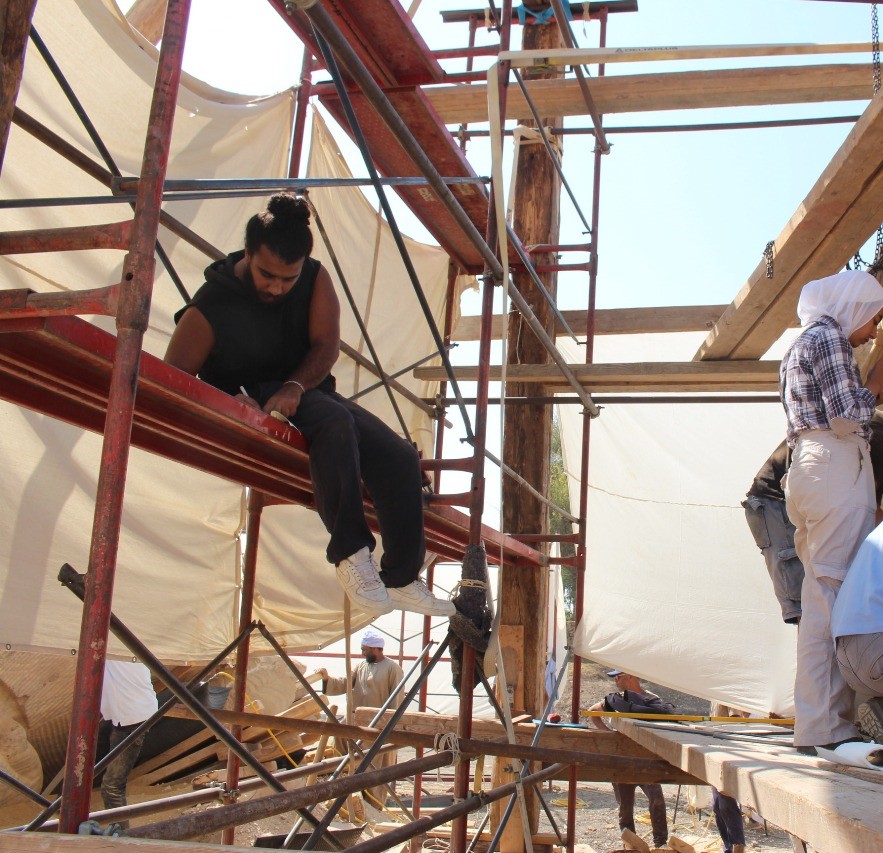
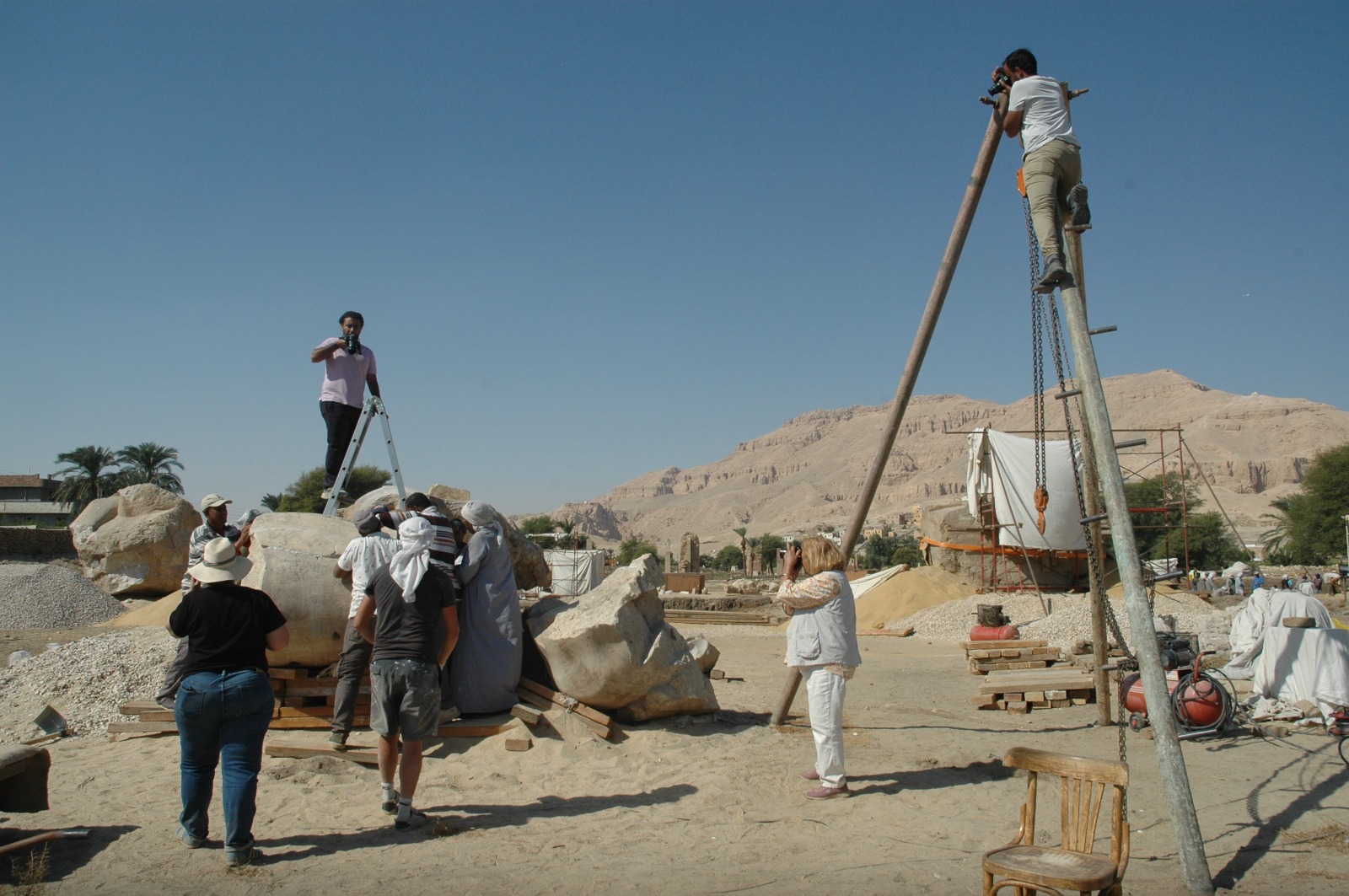
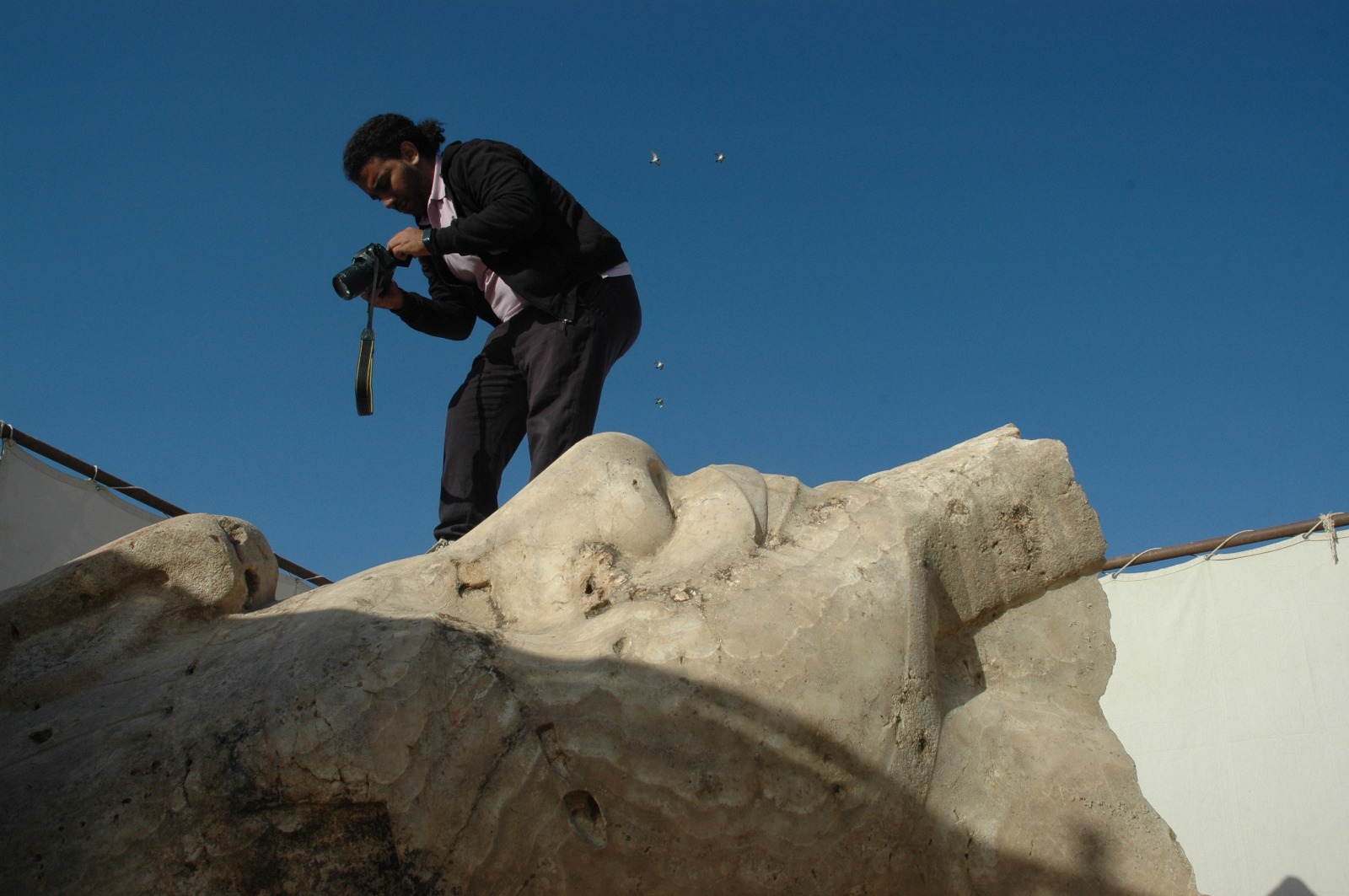
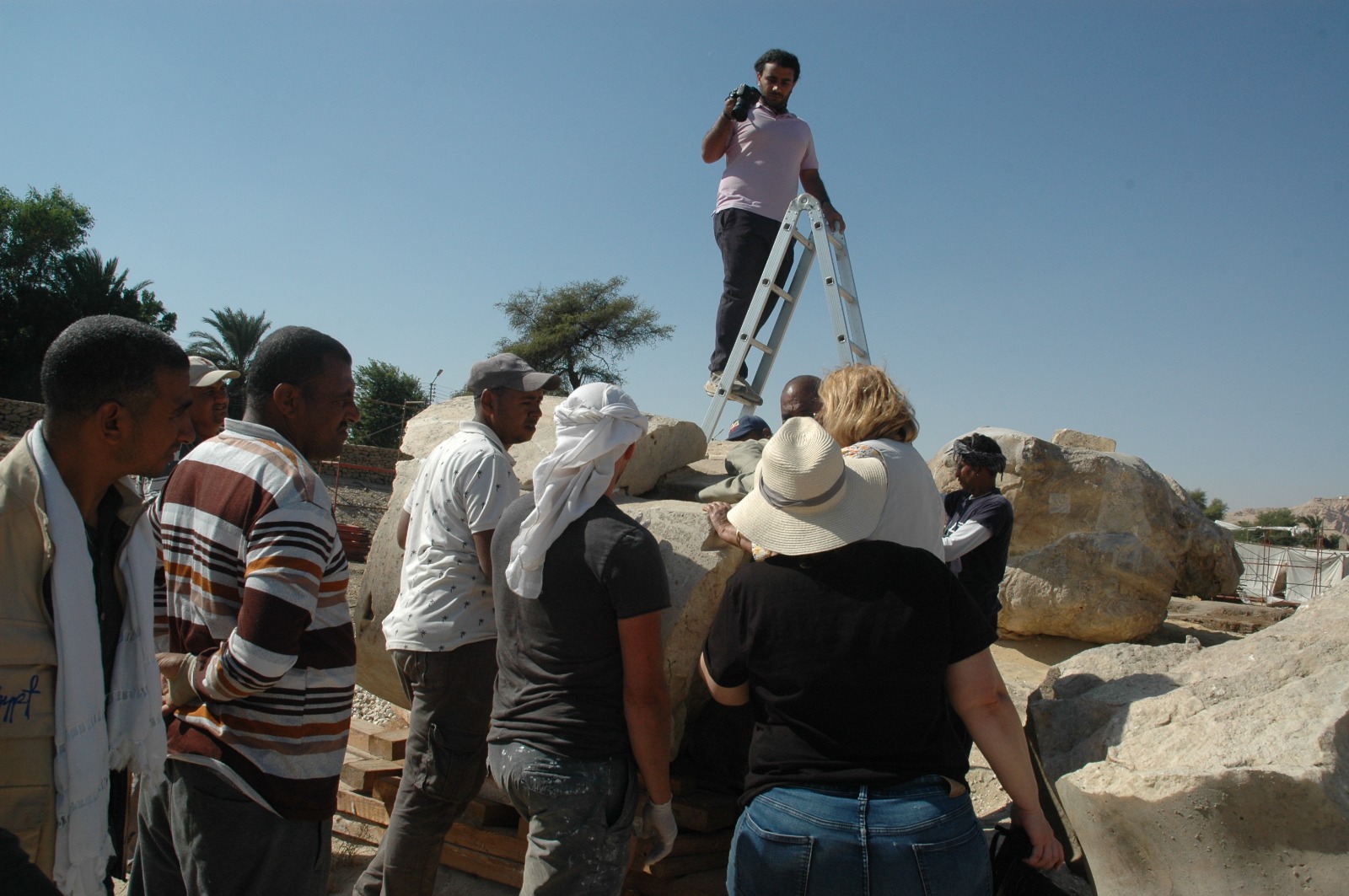
On-site 3D scanning, photogrammetry and full documentation workflow for the colossi of Amenhotep III and his mortuary temple at Kom el Hettan — delivered together with the team at Hampikian for Architecture & Heritage Management.

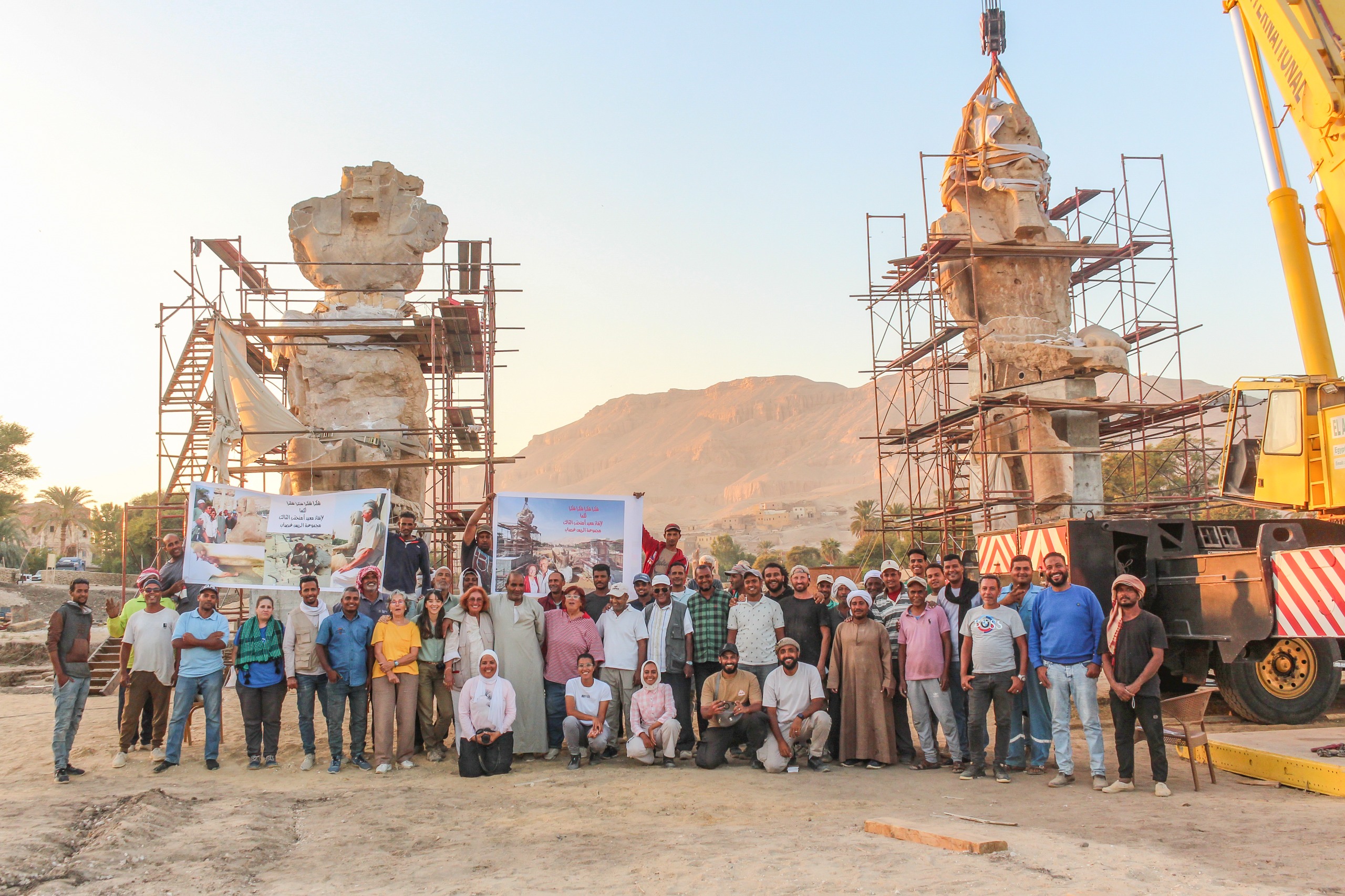
This is the project that became international news. In December 2025, Egypt unveiled meticulously restored colossal statues of Pharaoh Amenhotep III in the southern city of Luxor — toppled by a strong earthquake around 1200 BC, now re-assembled after years of conservation and archaeological work.

Working as part of the team at Hampikian for Architecture & Heritage Management, I contributed to the 3D documentation workflow on-site — conducting high-precision scanning of heritage and archaeological elements alongside colleagues, producing accurate 3D models directly from the scan data, and optimizing and cleaning that data for use in visualization, archiving and active restoration planning.

Every colossal fragment the team scanned becomes part of a growing digital archive: a record of what survived, what was reassembled, and what still needs to be traced. It is, in every sense, architecture at the scale of history.

G
In The Press

A project I worked on, in international news.

I worked on 3D scanning and documentation as part of the team on the Colossi of Memnon and Amenhotep III temple conservation at Kom el Hettan, Luxor — through Hampikian for Architecture & Heritage Management. In December 2025, the unveiling of the restored colossi was covered by The Independent.

Est. 1986

The Independent

London · UK
Sunday, December 14, 2025Travel · HeritageVol. XXXIX · No. 347

— Amenhotep III · Luxor —

Egypt reveals its new tourist attraction — huge restored colossal statues of pharaoh

“The colossi were toppled by a strong earthquake in about 1200 BC.”

Associated PressLuxor Dispatch
Visitors photograph the two giant reassembled alabaster statues of Pharaoh Amenhotep III in Luxor, Egypt, December 14, 2025.
Visitors take photos with the two giant reassembled alabaster statues of Pharaoh Amenhotep III in the southern city of Luxor, Egypt. AP Photo / Amr Nabil

Egypt has officially unveiled meticulously restored colossal statues of an ancient pharaoh in the southern city of Luxor — an event designed to bolster the nation's vital tourism sector.

The twin alabaster figures of Amenhotep III, toppled by an earthquake around 1200 BC, have been painstakingly reassembled at the king's mortuary temple near the Theban Necropolis. Officials presented the project as a flagship of the country's ongoing work to restore, preserve and share its architectural heritage with the world.

For a country whose built environment spans five millennia, restoration is not just archaeology — it is a living practice. The same sensibility runs through modern Egyptian design: an instinct to honour proportion, material and light, and to let each project sit comfortably inside its context.

That instinct, practised day-to-day in a Cairo studio, is what makes each new home, each render, each detail drawing feel connected to a longer story. The statues rose. They fell. And, now, they rise again.

Continued on page A12 ·Read the full article in The Independent· £2.80

Source: The Independent, 14 Dec 2025 · AP Photo / Amr Nabil

Project Highlights

Inside the work

01

High-Precision 3D Scanning

02

Full Documentation Workflow

03

3D Modeling

04

3D Rendering

3D Model

Amenhotep III — reality-capture head

Reality-capture render of the Amenhotep III head
Drag to rotate

The service

From scan to digital archive

Built from on-site terrestrial scanning at Kom el Hettan, the mesh preserves sub-centimeter detail across the alabaster fragments — every chip, fracture and surviving carved line.

Working as part of the team at Hampikian, the same model feeds three workflows in parallel: the conservation team's restoration planning, a permanent digital archive of what survived, and the visualization outputs that share the work with the public.

3D Printing

Accurate 3D printed models from the 3D model drawings

The service

From digital model to physical study

The same scan-derived geometry that drives the digital archive is sliced for additive manufacture — producing physical study models the conservation team can hold, compare and place alongside the surviving fragments.

Gold seam-lines on each print mark where the original alabaster pieces meet, making the reassembly legible at a glance — from broken fragment to restored colossus.

3D-printed study model of an Amenhotep III statue with gold-outlined assembly seams
3D-printed study model of the Amenhotep III seated pharaoh with gold-outlined reassembly lines

3D Visualization

3D flythrough — scan-derived model of an Amenhotep III fragment

The motion record

Scan to flythrough

3D model flythrough of an Amenhotep III colossal fragment

Built from the same scan-derived geometry as the interactive 3D model above — the flythrough is the motion version of that archive, used to present the colossus to audiences who can't stand on site.

Press Coverage

Egypt reveals its new tourist attraction — huge restored colossal statues of pharaoh.

The Independent · 14 December 2025

Read the article

Work with me

Want something like Colossi of Memnon & Amenhotep III Temple for your site?

Pre-filled with the right service and this project as reference — just tell me about yours.

Start a similar project